

A2L Refrigerant Sensors: A New Failure Point That Can Shut Down Your HVAC System
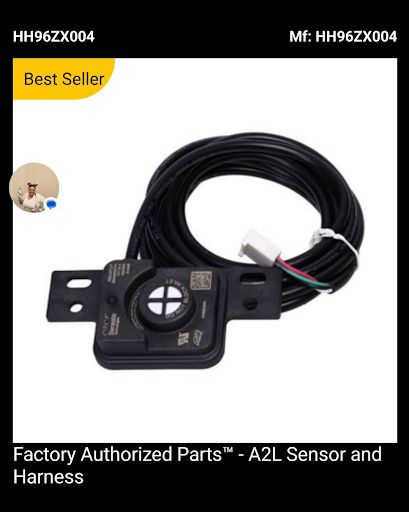
A newer HVAC system can be running perfectly one day and stop cooling the next—not because the compressor failed or the refrigerant leaked, but because the refrigerant safety sensor itself failed.
I encountered that situation twice last week, on two different brands. Both systems were less than two years old.
As an HVAC contractor, I understand the purpose of these sensors. Equipment using A2L refrigerants includes additional safety measures because of the refrigerant’s lower flammability classification. My concern is how sensor failures affect operation, how technicians are supposed to diagnose them, and how quickly we can get customers cooling again.
A sensor failure that looked like a dead control board
The first call involved a complete Bosch system we installed less than six months ago. It had been working wonderfully until the customer reported no cooling.
When I arrived, the blower would not respond to a call. The control board’s diagnostic light was off, so there were no flashing codes to help identify the problem.
I confirmed proper high- and low-voltage power to the equipment. With power present, no response, and no diagnostic light, I diagnosed a failed control board.
Only after replacing what turned out to be a perfectly good board and calling Bosch technical support did we identify the actual problem: a faulty A2L sensor.
The board has a diagnostic code for a sensor fault, but this failure did not produce that code. Instead, it made the control appear completely dead. The diagnostic information available to me did not document that behavior.
That is a serious gap. A technician can follow the available troubleshooting information and still replace a good component because the actual failure hides the diagnostic system itself.
A different brand, another sensor failure
The next day, we encountered another system from a different manufacturer, installed approximately 15 months earlier.
This system displayed a four-flash code indicating a communication problem with the A2L sensor. The fault was easier to identify, but the result for the customer was the same: complete loss of cooling.
Two brands. Two relatively new systems. Two sensor-related failures on consecutive days.
Those calls alone do not establish an industry-wide failure rate. They do show a real service problem that manufacturers need to address.
Diagnosis and parts availability matter
We already deal with small components that can interrupt an entire system: capacitors, condensate float switches, fuses, and thermostat batteries.
The A2L sensor can now be another item on that list. In these two cases, however, we did not have conclusive diagnostic steps covering the failures we encountered or a universal replacement option.
When we checked availability, one manufacturer had 21 sensors in stock. The other quoted a three- to four-day wait.
For a customer without cooling, that delay matters—especially when the system is nearly new.
Safety equipment needs dependable service support
I am not arguing against refrigerant safety sensors. If equipment requires a sensor for safe operation, that sensor needs to function correctly.
But manufacturers also need to provide:
- Clear diagnostic procedures that cover actual failure behavior.
- Fault indications that remain useful when a sensor fails.
- Readily available replacement parts.
- Clear information about approved replacement compatibility.
- Updated service documentation when previously undocumented failures are identified.
In my view, these experiences reveal an oversight in the rollout of equipment using newer refrigerants. The safety requirements reached the field, but the troubleshooting information and replacement support I needed were not adequate for the failures I encountered.
Customers expect reliable comfort. Technicians need accurate information and available parts to deliver it.
A required safety component deserves the same attention to reliability and serviceability as the rest of the system.
Nathan Hausey
Total Environmental Cooling and Heating
Accurate. Reliable. Comfort.
Total Environmental appreciates your business
